Gardeners with limited space often face a dilemma: how to add the visual drama of a flowering tree without letting it dominate the landscape. A range of dwarf and compact tree varieties offers a practical answer, providing blooms, foliage, and structure at heights that typically top out between six and fifteen feet. These smaller specimens can anchor a border, serve as a focal point, or even double as a privacy hedge, all while fitting neatly into the confines of a small yard or patio garden.
Choosing the right tree involves more than just size. Gardeners must consider the existing color palette, sunlight exposure, and hardiness zone. For instance, a tree with yellow blossoms might clash with a garden already full of white flowers, and a species that thrives in full sun may struggle in a shaded corner. The following varieties, each with its own distinct characteristics, offer options for a range of conditions and aesthetic preferences.
Early Bloomers and Spring Highlights
For those eager to see color early in the season, the saucer magnolia (Magnolia x soulangeana) is a staple, producing fragrant pink blooms in early spring. While it can reach up to twenty feet, regular pruning keeps it manageable. Similarly, the star magnolia (Magnolia stellata) tops out at around fifteen feet and offers star-shaped white flowers. Both are adaptable to zones 4 through 9 and are not particular about soil type.
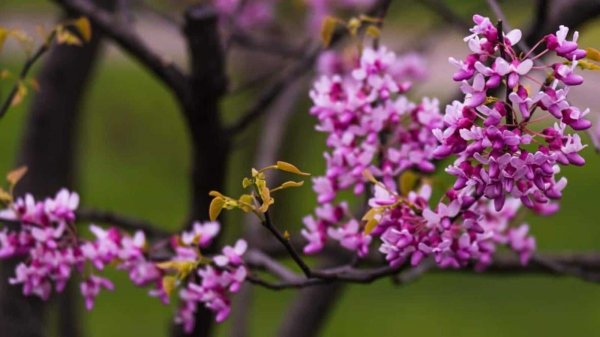
The redbud (Cercis canadensis), despite its name, yields pink or white flowers and maxes out at ten feet, providing curb appeal from spring through fall. The Sargent crabapple (Malus sargentii) is another spring bloomer, with clusters of white flowers and dense foliage that makes it an effective privacy screen. It grows to between six and ten feet and thrives in zones 4 through 8.
Summer Color and Unusual Forms
Summer brings a different set of options. The crape myrtle (Lagerstroemia) offers white, red, pink, or lavender flowers, with dwarf varieties staying between six and ten feet. The bottlebrush tree (Callistemon) produces red, brush-like blooms from late spring through early fall and can reach up to fifteen feet in mild climates. The chaste tree (Vitex agnus-castus) is a drought-tolerant choice, growing to eight or ten feet with white, blue, or lavender flowers.
For a truly unique appearance, the smoketree (Cotinus coggygria) features pinkish blooms that resemble puffs of smoke, and its leaves shift from bluish-green to red and yellow in the fall. The seven-son flower (Heptacodium miconioides), part of the honeysuckle family, blooms mid-summer with fragrant white flowers in clusters of seven. The powder puff (Calliandra haematocephala), a southern Florida favorite, offers fuzzy pink, red, or white blooms and can reach fifteen feet.
Foliage and Fruit for Year-Round Interest
Several compact trees are prized for their foliage and fruit as much as their flowers. The Japanese maple (Acer palmatum) has varieties that stay around ten feet, with leaves that turn reddish to maroon in the fall. The purpleleaf sand cherry (Prunus x cistena) features purplish-red leaves that hold their color through summer, along with dainty white spring flowers and small fruit suitable for jams. The Jack dwarf pear (Pyrus calleryana 'Jaczam') offers white spring blooms, tiny greenish-yellow fruit, and reddish fall foliage.
The Utah serviceberry (Amelanchier utahensis) is a naturally smaller variety, typically not exceeding sixteen feet, with white spring blooms and purplish-black summer fruit. The stewartia (Stewartia) is a slow-growing option that can be pruned to size, yielding white summer flowers and autumn leaves that shift to purple and orange.
Specialty Choices and Considerations
Some compact trees require specific conditions or come with caveats. The blue Chinese wisteria (Wisteria sinensis), though technically a vine, can be trained as a small tree, offering fragrant lavender flowers in late spring and early summer. The dragon tree (Dracaena marginata) is a statement piece that takes up to fifteen years to bloom, but is considered hardy in zones 10 to 12; note that it is toxic to pets. The plumeria (Plumeria rubra) is a tropical option for zones 10 to 12, with fragrant pinkish-red flowers, but it requires full sun and well-drained soil.
For a weeping form, the weeping cherry (Prunus pendula) is a popular choice, with cascading pink flowers and small black fruit that birds enjoy. The Franklin tree (Franklinia alatamaha), named after Benjamin Franklin, produces white flowers with yellow centers and can be grown as a shrub or single-trunk tree, typically staying under ten feet in cultivation. The sasanqua (Camellia sasanqua) offers dwarf varieties that stay under six feet, with pink to red flowers, and the 'Inspiration' variety features white blooms with a maroon border.
When selecting a compact flowering tree, it's essential to match the species to your local climate and soil conditions. Many of these trees are hardy and low-maintenance once established, but they still require proper sunlight, water, and occasional pruning. With careful planning, even the smallest garden can enjoy the beauty and structure that a flowering tree provides.