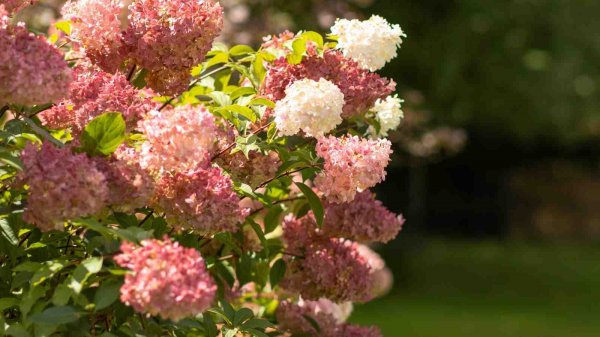
Gardeners seeking reliable color from summer into fall often turn to hydrangeas, a group of woody ornamentals known for their cold hardiness and abundant flowers. With new cultivars entering production, the palette now spans blues, pinks, purples, and reds, with some varieties shifting hues as the season progresses. These shrubs fit a range of spaces, from compact containers to foundation plantings and hedges.
The appeal extends beyond the garden border. Many hydrangeas hold their blooms as they dry on the stem, making them suitable for fresh or dried arrangements. Fall is a prime time to add new plants, as nurseries stock a wider selection of improved varieties.
Native and Smooth Hydrangeas
Among the most cold-hardy options is the smooth hydrangea (Hydrangea arborescens), a U.S. native that thrives across varied climates. The species typically produces white and lime-green flowers, but newer cultivars introduce pink, rose, mauve, and cerise tones. 'Incrediball® Blush' features large, soft blush blooms that age to deep rose and green by autumn. Its sturdy stems support the heavy flowerheads without drooping, and the shrub blooms from early summer until frost.
Another smooth hydrangea, 'Invincibelle® Spirit II', offers rose-pink mophead flowers that fade to green as they mature. This improved version of the original 'Spirit' has strong stems and deep green foliage. It repeats flowering from early summer through fall and includes fertile florets, which attract pollinators—a feature not present in all mophead types.
For a more compact smooth hydrangea, 'Invincibelle® Ruby' grows 3 to 4 feet tall and wide, bearing rounded clusters in ruby red, rose, and silvery pink. Its stout branching and dark leaves make it a good fit for mixed borders, perennial beds, and pots.
Bigleaf and Mountain Hydrangeas
Bigleaf hydrangeas (Hydrangea macrophylla) are known for their large, glossy leaves and mophead or lacecap blooms. The Endless Summer® series includes several reblooming cultivars. 'Pop Star®' is a dwarf bigleaf that reaches only 18 to 36 inches tall, producing vivid blue or bright pink mopheads depending on soil pH. Its foliage turns burgundy red in fall, and dried flowers persist into winter.
'Twist-n-Shout™', also in the Endless Summer® series, features lacecap blooms in rosy pink or violet blue, again depending on soil pH. Red stems add contrast, and the plant reblooms reliably. It prefers afternoon shade in warmer regions.
'Blushing Bride®' offers pure white double blooms that transition to blush pink as they age. Unlike many hydrangeas, its white-to-pink coloration is not affected by soil pH. The shrub sets buds on both old and new wood, providing nearly guaranteed blooms even after harsh winters.
Mountain hydrangeas (Hydrangea serrata) are similar to bigleafs but more compact. 'Bluebird' produces lacecap flowers in light blue with deeper blue centers in acidic soil; in alkaline soil, they turn pink. The outer florets droop slightly, revealing pink backs for a two-tone effect. To adjust bloom color, gardeners can amend soil with aluminum sulfate to increase acidity (pH below 6.0) or lime to raise pH above 6.0. A soil test is recommended before making changes.
'Tiny Tuff Stuff™' is a dwarf mountain hydrangea with double-petaled lacecaps in purple, blue, pink, or white, depending on soil pH. It is reliably winter hardy to zone 5 and suitable for containers or the front of foundation plantings.
Panicle and Oakleaf Hydrangeas
Panicle hydrangeas (Hydrangea paniculata) are adaptable and tolerate more sun than other types. 'Quick Fire®' is one of the earliest to bloom, with white flowers that turn pink in summer and mature to deep rose and red in fall. Its foliage also changes to gold and purple-red at season's end. It blooms on new wood, so cold winters do not affect buds; pruning back by one-third in late winter encourages strong growth.
'Limelight Prime®' improves on the classic 'Limelight' with shorter, sturdier stems that hold heavy blossoms upright. Flowers emerge greenish-white and transition to rich pinks and reds. For a more compact option, 'Little Lime' reaches 3 to 5 feet tall with chartreuse clusters. 'Candy Apple™' is another panicle with rounded lime blooms that blush pink, plus red, purple, and orange fall foliage. It blooms on new wood and benefits from late winter pruning.
Oakleaf hydrangeas (Hydrangea quercifolia) offer both blooms and foliage interest. 'Ruby Slippers' was introduced by the U.S. National Arboretum in Washington, D.C., in 2010. It produces white flowers that age to rosy red and then ruby red, with deep scarlet fall foliage. The compact shrub holds its nearly ten-inch flower clusters upright, and its fertile florets attract pollinators.
For gardeners seeking a hydrangea with a unique color shift, 'Let's Dance Sky View®'—a cross between bigleaf and mountain types—emerges sky blue with a pale green eye in acidic soils, maturing to full blue. Its dwarf, rounded form suits small spaces and front-of-border locations.
When selecting hydrangeas, consider the mature size, sun exposure, and soil pH to match the plant to the site. Many cultivars bloom on both old and new wood, offering extended flowering even after challenging winters. With proper placement and minimal care, these shrubs provide months of color and structural interest in the landscape.