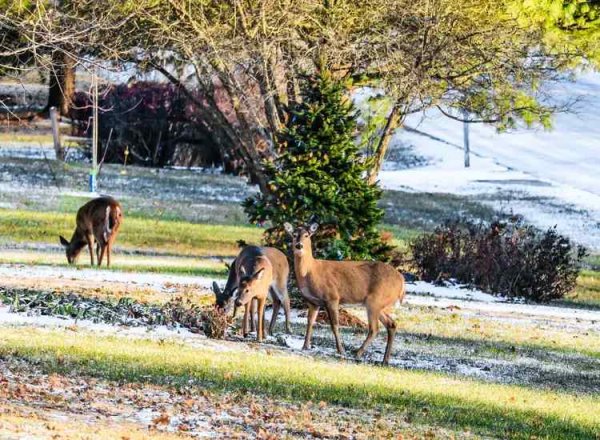
As winter strips the landscape of easy forage, deer become less picky and more willing to sample almost any shrub or tree in their path. For homeowners who prize their garden's appearance, the result can be a yard full of chewed-down stubs. But according to two landscaping professionals, a handful of plants are so unappealing—whether due to taste, texture, or scent—that deer usually pass them by.
Drake Decker, owner of Decker Landscape & Design, and Lorraine Ballato, an award-winning horticulturalist, writer, and photographer, shared their go-to species for winter gardens that can withstand deer pressure. While no plant is entirely deer-proof, these seven are known for their deer-resistant qualities.
Evergreens That Deer Avoid
Japanese andromeda is Ballato's first choice for a deer-resistant plant that also brings early color. This broadleaf evergreen produces clusters of fragrant flowers in early spring, which are a magnet for bees emerging from winter. The same fragrance that attracts pollinators seems to deter deer, making it a dual-purpose addition to any yard.
Spruce trees, particularly the dwarf Alberta spruce, are another reliable option. Ballato notes that spruces come in a variety of forms—green, blue, ground-hugging, vertical, cone-shaped, or bushy—so they can add visual interest to an otherwise drab winter landscape. Decker points out that the dwarf Alberta spruce's stiff needles are difficult for deer to chew, so they typically give it a pass. It also handles cold temperatures and heavy snow loads with ease, making it a sturdy choice for northern gardens.
Alternatives to Deer Candy
Arborvitae is often called "deer candy" because deer love it, but eastern red cedar offers a similar look without the appeal. Ballato explains that this conifer is rarely touched by deer and can be found with golden tips or needles. While it doesn't produce showy flowers, it does bear colorful blue berries that are edible and useful in decorations and containers.
Boxwood is a classic foundation plant that holds its shape under heavy snow, and its potent smell and bitter taste make it unappealing to deer under normal conditions. However, Decker cautions that in extremely harsh winters, deer may resort to eating boxwood as a last resort. Similarly, Japanese holly, which resembles boxwood, is more resistant to winter burn and requires no winter protection, though a few inches of mulch in the fall can help.
Sharp Needles and Bitter Leaves
Juniper is another deer deterrent, thanks to its sharp needles and strong smell. Decker contrasts juniper with soft, easy-to-eat plants like azalea, ivy, roses, and tulips, which deer prefer. While deer might gingerly nibble on juniper, they usually do so only when no other food is available.
Mountain laurel is Ballato's final recommendation. Deer may occasionally try it, but the leaves burn their mouths, discouraging further sampling. For total protection, she suggests erecting metal or polypropylene deer fencing around the plant, with taller fences being more effective since deer can leap up to 8 feet. Even a shorter fence can deter mildly interested deer.
For gardeners looking to minimize winter deer damage, these seven plants offer a practical, low-maintenance solution. By choosing species that deer find unpalatable, homeowners can enjoy a vibrant winter landscape without constant worry about hungry visitors.