Gardeners often overlook shaded areas as prime spots for vibrant container displays, but a host of shade-tolerant plants can transform hanging baskets into focal points of color and texture. From the cascading blooms of fuchsias to the iridescent leaves of Persian shield, these selections thrive in low-light conditions while adding vertical interest to patios, entryways, and beneath tree canopies.
Designing a successful shaded basket involves pairing plants with complementary growth habits—upright specimens for structure, mounding types for fullness, and trailing varieties to spill over the edges. Many shade lovers also share common cultural needs: organically rich soil, consistent moisture, and good drainage. Some, like sweet potato vine and certain begonias, tolerate drier conditions once established, making them forgiving choices for busy gardeners.
Flowering Favorites for Low Light
Begonias are a cornerstone of shaded containers. The 'Dragon Wing' hybrid, with its arching canes, wing-shaped leaves, and pendulous flowers, performs well in partial shade and even tolerates deep shade, heat, and humidity. Its blooms, which come in white, red, pink, or salmon, are edible with a hint of citrus. Angel wing begonias offer similar versatility, with mottled foliage and clusters of colorful flowers.
Impatiens remain a classic choice for shady spots, blooming profusely from spring to frost in a rainbow of colors. However, the common Impatiens walleriana is susceptible to downy mildew in damp conditions. Gardeners can opt for improved series like Beacon® and Imara™, which offer better disease resistance. New Guinea impatiens (Impatiens hawkeri) provide larger flowers and leaves, plus greater tolerance for sunnier spots and mildew resistance.
Fuchsias are a favorite for hanging baskets, with their delicate, drooping flowers in shades of white, pink, red, magenta, and purple. They attract hummingbirds and bloom from spring to fall, but they require bright, indirect light and consistent moisture. Torenia, with its snapdragon-like trumpet flowers, and browallia, with starry blue or purple blooms, also bring long-lasting color to shaded baskets. Heat-tolerant series like 'Summer Wave' torenia and 'Bell' browallia are available for warmer climates.
Foliage That Pops in the Shade
For gardeners who prioritize foliage, coleus offers an incredible range of leaf colors, from lime green to deep purple, in shapes from broad to ruffled. Trailing varieties like 'Burgundy Wedding Train' spill beautifully over basket edges. Sweet potato vine (Ipomoea batatas) provides vigorous trailing growth with chartreuse, purple, or variegated leaves, lending a tropical feel. It performs best in partial shade, where it shows the most color.
Rex begonias are prized for their intricate, veined leaves with red undersides, available in silver, purple, red, and green combinations. They prefer high humidity and regular moisture, but can be finicky if overwatered. Persian shield (Strobilanthes auriculata var. dyeriana) offers striking iridescent purple leaves that serve as a focal point. Golden creeping jenny ('Aurea') adds a cascading chartreuse accent, brightening shady areas with its small, round leaves.
Unique Specimens and Edible Options
For something unusual, the chenille plant (Acalypha hispida) produces long, fuzzy red plumes that drape from arching stems. Dwarf varieties like Acalypha pendula are ideal for hanging baskets. Epiphytic orchids, including Phalaenopsis and Cattleya, grow well in wood-slatted baskets with bark-based media, thriving in partial shade outdoors or bright, indirect light indoors. Staghorn ferns (Platycerium bifurcatum) are another epiphytic option, with antler-like fronds and shield fronds that capture nutrients. They require a wire basket lined with moss and a well-draining mix.
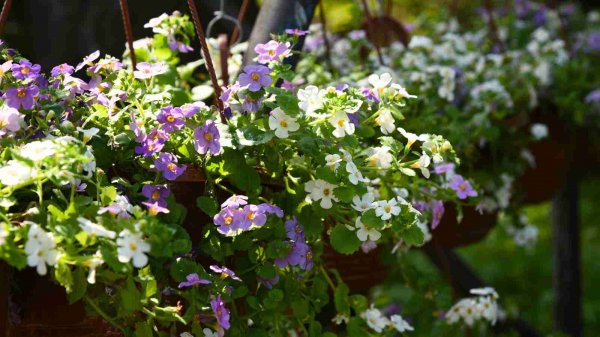
Herbs and edible flowers add a culinary twist to hanging baskets. Mint, available in many varieties, forms a mounding, trailing specimen and is best grown in containers to prevent spreading. Nasturtiums produce edible leaves and flowers with a peppery flavor, and they tolerate dry conditions and partial shade. Bacopa and lobelia offer cascading blooms in white, blue, or pink, and both benefit from morning sun and afternoon shade. Bacopa varieties like 'Tried and True' and 'MegaCopa' are more heat-resistant.
When assembling a shaded basket, consider the specific light conditions—morning sun, dappled light, or deep shade—and choose plants accordingly. Pair selections with similar water and soil needs, and trim regularly to maintain shape and encourage new growth. With these versatile plants, shaded areas can become inviting, colorful retreats throughout the growing season.