Peonies, a garden favorite with a lineage stretching back nearly four millennia to China's Ming Dynasty, offer a remarkable range of landscape possibilities. With thousands of cultivated varieties available today, these perennials can be tailored to fit flower beds, mixed borders, or standalone focal points. Understanding the three main types—herbaceous, tree, and intersectional—is key to selecting the right peony for your garden's conditions and design goals.
Herbaceous peonies, also known as Chinese peonies, are the classic garden variety, typically blooming in late spring to early summer. They thrive in USDA zones 3-8 and form clumps that can reach two to three feet in height. Woodland peonies, a subgroup of herbaceous types, prefer dappled shade and are the earliest to flower. Tree peonies, which are deciduous sub-shrubs, produce even larger blooms and are hardy in zones 4-9. Intersectional, or Itoh, peonies—a hybrid of herbaceous and tree types—offer flowers up to eight inches across and bloom later in the season, extending the peony display.
Placement Ideas for Maximum Impact
In traditional flower beds, Chinese peonies perform best with at least six to eight hours of full sun daily. Space them about three feet apart to ensure good air circulation and room for their roots to develop. Because their heavy blooms can flop after rain, using peony rings or stakes can prevent them from overshadowing neighboring plants.
For mixed beds, consider a tree peony as a specimen plant, ideally positioned to receive morning sun and afternoon shade. These shrubs need ample space—at least five feet of clearance—to thrive. Itoh peonies also work well as focal points. In areas with dappled shade, woodland peonies can be planted around the base of shrubs or evergreens, adding early color.
Borders and hedges benefit from mass plantings of Chinese peonies, which can be placed mid-border to hide their foliage as it fades later in summer. Taller tree and Itoh peonies are better suited to the back of a border. Both Chinese and tree peonies can be used to create a flowering hedge along a fence or property line, provided they are spaced properly and not competing with larger trees for resources.
For a striking standalone statement, cluster a few peonies together with structural support to showcase their lush blooms. Over time, these clumps become a garden centerpiece. While container growing is possible, it is not recommended because peonies have extensive root systems that require space; in pots, roots are more susceptible to temperature extremes.
Selecting the Right Peonies
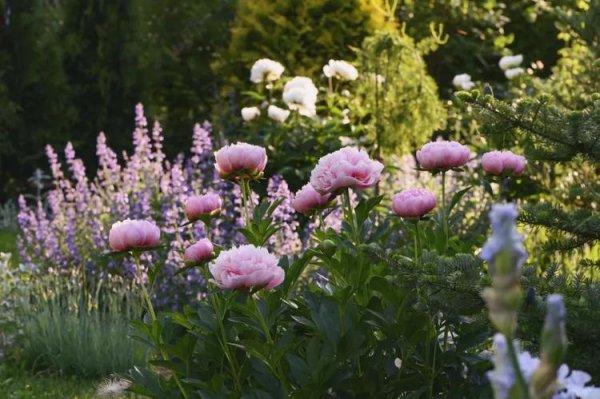
When choosing peonies, consider the color palette—grouping similar hues creates a more cohesive look. To enjoy blooms for seven to eight weeks, select varieties with staggered bloom times: woodland peonies for early season, tree and herbaceous for mid-season, and Itoh for late. Pay attention to height, ensuring taller types don't shade shorter ones that need full sun. For small spaces, dwarf or patio peonies, which stay under two feet, are an excellent option. Companion plants like salvia, bearded iris, and delphinium share similar growing conditions and complement peonies beautifully.
Essential Care Guidelines
Peonies are relatively low-maintenance when their basic needs are met. They require one to two inches of water per week, applied at the base to avoid fungal issues. Light requirements vary by type: Chinese peonies need full sun, woodland peonies prefer partial shade, and tree and Itoh peonies tolerate full sun to partial shade. Fertilize twice a year—once in early spring and again after blooming—using bulb fertilizer, bone meal, or a balanced slow-release formula. Be vigilant against fungal diseases like Botrytis blight and powdery mildew by ensuring good airflow and practicing thorough fall cleanup.
Whether you're designing a new garden or refreshing an existing one, peonies offer versatility and enduring beauty. By matching the right type to your site conditions and following these placement and care tips, you can enjoy a spectacular peony display that returns year after year.