Junipers (Juniperus spp.) are a mainstay in many landscapes, prized for their adaptability, drought tolerance, and diverse growth habits. Whether you need a low-growing ground cover to stabilize a slope or a tall, narrow screen for privacy, there is likely a juniper cultivar suited to the task. Their foliage colors range from silver-blue to gold to deep green, offering plenty of design flexibility.
Because the genus includes so many cultivars, selecting the right juniper starts with assessing your landscape needs. Consider the plant's mature size, growth rate, and preferred sun exposure before making a purchase. This ensures the chosen juniper will thrive in its intended location.
Using Junipers as Accents and in Borders
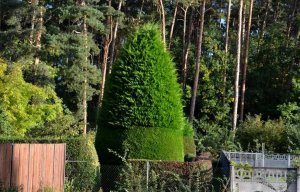
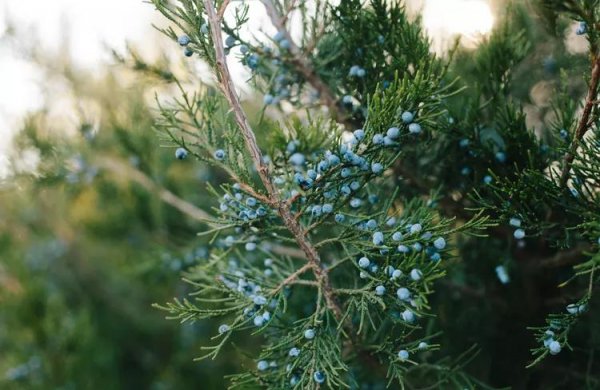
For a striking focal point, an upright juniper like Juniperus communis 'Arnold' provides a dense, columnar form with blue-green foliage. Its waxy cones transition from green to blue-black as they mature. For a splash of color, Juniperus conferta 'All Gold' offers bright gold foliage that contrasts nicely with darker-leaved plants, and it requires minimal maintenance.
In mixed borders, junipers contribute structure and year-round interest. You can place a single or odd number of larger tree-form junipers as anchors, then fill in with varying sizes and textures. This approach creates a layered, visually appealing planting that remains attractive throughout the seasons.
Creating Privacy Screens and Hedges
When privacy is a priority, fast-growing juniper varieties can form effective hedges or screens. Juniperus virginiana 'Taylor' is a moderate grower with blue-green, dense foliage and a narrow columnar shape, reaching up to 30 feet tall and about 3 feet wide. It is suitable for USDA hardiness zones 3-9. For a quicker screen, Juniperus chinensis 'Spartan' grows to 15 feet tall and 5 feet wide, with a deep green color.
Selecting the right size and growth rate is crucial to avoid over-pruning or gaps in coverage. Always check the mature dimensions of the cultivar to match your planting area.
Ground Covers for Erosion Control
Steep slopes can be challenging to landscape, but low-growing junipers are a popular solution. Their spreading habit and dense foliage help control erosion while providing year-round greenery. Several varieties are well-suited for this purpose:
- Juniperus chinensis 'Sargentii' (zones 4a-9b) grows 18 inches to 2 feet high with a 7-foot spread, featuring green foliage.
- Juniperus horizontalis 'Plumosa Compacta' (zones 3a-9b) reaches only 18 inches in height but spreads up to 8 feet, with gray-green summer foliage that turns bronze-purple in winter.
- Juniperus horizontalis 'Wiltoni' (zones 4b-9b), commonly called blue rug, has intense silver-blue foliage and grows just 6 inches tall, spreading 6-8 feet.
- Juniperus conferta 'Shore Juniper' (zones 6a-9b) has yellowish-green foliage, grows 12-15 inches tall with an 8-foot spread, and tolerates poor, sandy coastal soils.
These low-maintenance ground covers are ideal for hard-to-reach areas where mowing or frequent care is impractical.
Junipers in Containers and Bonsai
Junipers are also a classic choice for bonsai, but they work well in patio containers too. Slow-growing dwarf varieties are best for pots. For example, Juniperus procumbens 'Nana', a dwarf Japanese juniper, can be trained to mound, cascade, or even form an upright topiary. When planting in a container, choose a pot with drainage holes that is no more than twice the size of the nursery pot to allow room for growth. For taller plants, ensure the pot is heavy enough to provide stability.
For container-grown junipers, select a variety that is hardy to one or two USDA zones colder than your location to ensure winter survival. Use a moist, well-draining potting mix high in organic matter. Water regularly and feed only during the summer with a slow-release, all-purpose fertilizer.
Junipers Care and Pest Management
Junipers perform best in full sun; too much shade leads to sparse growth and increased susceptibility to disease. They are adaptable to various soil types as long as the soil drains well. Even heavy clay can be amended with organic matter to support healthy growth. Once established, junipers are drought-tolerant and rarely need extra watering. Overwatering can cause root rot, so it's important to let the soil dry between waterings. Most junipers require little or no pruning, except to remove dead foliage.
Common insect pests include bagworms, spider mites, leaf miners, webworms, and aphids. Bagworms can be removed manually by snipping off the webs, while other pests may be controlled with pesticides. Problems often arise when junipers are overwatered or planted in shady spots. According to the University of Georgia Extension, these cultural conditions are key to preventing pest issues.
With careful selection and minimal upkeep, junipers can serve as reliable, attractive components in almost any landscape design.