Homeowners looking to add greenery to challenging outdoor spaces may wonder if artificial plants can stand in for the real thing. According to horticulture experts and a designer who has used them successfully, the answer is yes—but with significant caveats about durability, placement, and environmental impact.
Aaron Steil, a consumer horticulture extension specialist at Iowa State University's Department of Agriculture, cautions that most fake plants are not built for the outdoors. “They fade very quickly in the sun and look terrible sometimes after only a few short weeks outside,” he says. For those who still choose faux foliage, Steil advises selecting products labeled as outdoor-safe, made from UV-resistant and weatherproof materials like polyethylene (PE), polyblend plastics, or PVC.
Beyond aesthetics, there are environmental concerns. “Even under the best of conditions, faux plants won’t last forever and will eventually need to be tossed in the garbage, where the plastic they are made from will last forever in a landfill,” Steil notes. He also points out that fake plants are not a cost-saving measure, as they often cost more than their living counterparts.
Why Some Gardeners Choose Faux
Julia Marcum, the home designer behind the North Carolina–based blog Chris Loves Julia, turned to faux plants for a shaded, paved area beside her house where real plants struggled to thrive. She planted artificial greenery in containers filled with real soil. “The containers have been out there for years, and they are still evergreen. No pests, frost, fertilization, or sun damage to deal with,” she says.
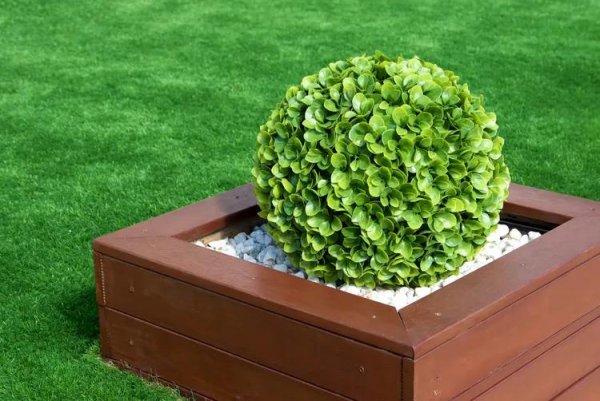
Faux plants also appeal to those who want species that are notoriously finicky, such as boxwoods, which are prone to disease. With artificial versions, there is no need to worry about growing conditions, and gardeners can freely combine plants that would not naturally coexist. Marcum enjoys mixing different heights and textures, and in her backyard she combined a pond cypress topiary, a plum pine double-ball topiary, a 5-foot-tall cedar pine tree, and boxwood greenery balls.
When to Avoid Fake Plants
One major drawback is that faux plants do not absorb water from the soil, which can lead to runoff and flooding after rain or snow. Their stagnant, year-round foliage can also block sunlight from reaching real plants, unlike deciduous trees and shrubs that shed leaves seasonally. Steil adds that fake plants can be difficult to keep anchored. “This means wind and rain can easily dislodge or blow them away,” he says.
Given these issues, experts recommend avoiding areas with poor soil drainage or where natural vegetation depends on sunlight. Faux plants are best used in containers, which avoids these pitfalls. Placed on a patio, entrance steps, or other paved areas, they typically won't interfere with the growth of real plants.
Mixing Faux and Real Plants
Combining fake and real plants in the same landscape can be tricky, as faux plants alter soil moisture and light availability. Gardeners may need to adjust watering habits to avoid overwatering real plants, since faux plants do not absorb water.
Marcum suggests an alternative: choose one or the other. She installed artificial grass turf between the bluestone pavers on her backyard patio. “The sun would just scorch any fescue grass between that stone, especially in the hot summers. However, we really wanted to bring some greenery close to the house,” she explains. She selected turf with a texture and color matching her real fescue farther back in the yard. “With the artificial turf, we don’t have to worry about weeding, watering, or any kind of care. It’s incredibly durable underfoot and doesn’t fade over time since it has UV resistance,” Marcum says.
For homeowners considering faux plants, the key takeaway is to choose quality materials, place them wisely, and be mindful of the potential effects on the surrounding environment. Whether used in containers or as a substitute for grass in paved areas, artificial plants can offer a low-maintenance green solution—but they are not a one-size-fits-all replacement for the real thing.