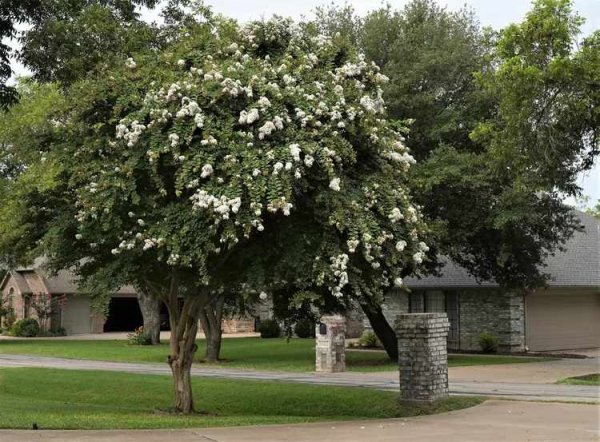
Crepe myrtle, a beloved ornamental across the American South, offers more than just summer blossoms. Its peeling bark, vibrant autumn foliage, and multi-trunk form provide year-round interest. Hardy in USDA Zones 6-10, this low-maintenance tree or shrub tolerates drought, deer, and pollution, making it a versatile choice for many yards. Here are nine distinct ways to incorporate it into your landscape, each with specific variety recommendations and placement tips.
For homeowners seeking a modest shade source near a patio or deck, crepe myrtle fits the bill. It grows 1 to 2 feet per year, reaching a manageable 30 feet at maturity, so it won't overwhelm the space. Its medium-to-fast growth rate means you won't wait decades for relief from the sun.
Specimen, Accent, and Border Planting
Planted alone in a front or backyard, crepe myrtle becomes a striking focal point. Give it ample room to reach full size, and surround it with low-growing groundcovers or perennials—but avoid crowding it with other trees or shrubs. In an open lawn, it shines as an accent, its blossoms and exfoliating bark standing out against sparse surroundings.
For smaller yards, dwarf varieties like 'Pocomoke' (3-5 feet tall with rose-pink flowers) fit neatly into perennial borders. Miniature types such as 'Houston', a weeping variety with watermelon-red blooms that tops out at 1-2 feet, offer even more compact options. These small cultivars share the same growing requirements as their larger counterparts.
Driveways, Hedges, and Foundations
Flanking a walkway or driveway with crepe myrtles in a staggered, informal row adds charm. Choose varieties that mature at 5-10 feet, like 'Red Rooster', to avoid obstructing paths or interfering with overhead utility lines. Note that while crepe myrtles withstand pollution, they have low salt tolerance, so avoid heavy winter road salt exposure.
For a privacy hedge, tall varieties such as 'Catawba' (10-15 feet) work well. Interplant different bloom colors—white, pink, lavender—for visual interest, but keep them 6-10 feet apart to ensure good airflow and reduce pest and disease risk. Though the hedge may look sparse initially, resist the urge to overcrowd.
As foundation plantings, dwarf crepe myrtles planted in groups or a staggered line can disguise utility boxes or soften architectural lines. Their roots are shallow and non-invasive, but maintain a distance from the foundation equal to the plant's mature height—for instance, 5 feet for a 5-foot-tall variety.
Mini Groves and Containers
To define outdoor spaces, plant crepe myrtles in a straight or curved line to create a mini grove. Choose varieties that are neither too tall (which could feel claustrophobic) nor too low-growing (which would compromise privacy). This approach works well for separating a seating area from the rest of the yard.
In colder regions, crepe myrtles can thrive in large containers. Select dwarf or miniature types, use a pot with ample drainage holes and well-draining potting mix, and place it on wheels for easy relocation. After the leaves drop in fall and the plant enters dormancy, move the container to an unheated garage or shed for winter protection.
Whether you're aiming for shade, privacy, or a splash of color, crepe myrtle's adaptability makes it a standout choice. By matching the right variety to your specific landscape need, you can enjoy its beauty for years to come.