Salvias, the largest genus in the mint family, have earned a permanent spot in many gardens, not just for their long bloom periods but for their resilience and appeal to wildlife. With hundreds of species ranging from low ground-hugging plants to tall shrubs, these perennials and annuals can serve multiple roles in a front yard, from filling bare spaces to forming natural screens. Their tubular, nectar-rich flowers are a magnet for hummingbirds, bees, and butterflies, while their foliage often resists deer and rabbit browsing—a practical advantage for suburban and rural landscapes alike.
Native to a wide range of climates, salvias grow across numerous USDA hardiness zones, with varieties suited to both moist and arid conditions. This adaptability makes them a staple in xeriscape designs, where water conservation is a priority. For gardeners looking to reduce irrigation, selecting species native to dry regions—such as desert sage (Salvia dorrii), mealy sage (Salvia farinacea), or hummingbird sage—improves the odds of survival during prolonged heat and drought. When extended dry spells hit, experts recommend watering slowly and deeply rather than frequently, to encourage robust root systems.
From Ground Cover to Privacy Screen
One of the most compelling reasons to incorporate salvias is their diversity in form and function. Low-growing varieties, typically 1 to 2 feet tall, spread horizontally and can serve as effective ground covers. The spread varies by species, ranging from 12 inches to more than 4 feet, so gardeners seeking quick coverage might opt for fast-spreading types like lyreleaf sage. For taller needs, shrub-like salvias such as Mexican bush sage (Salvia leucantha) and bog sage (Salvia uliginosa) can reach 5 feet or more in height and width, making them excellent candidates for a living privacy hedge.
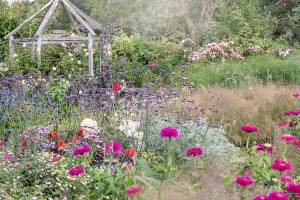
In mixed borders, salvias of all sizes work well when grouped with plants that share similar light and water requirements. Placing shorter varieties in the front and taller ones in the back creates a layered effect, though it is important to consider sun movement so that taller plants do not shade their neighbors. This flexibility allows salvias to be used as edging plants, container accents, or vertical focal points in a bed.
Species Worth Planting
Among the many types, red salvia (Salvia splendens), native to Brazil, is a perennial in USDA Zones 10-11 and grown as an annual elsewhere. It blooms from summer into fall, with flowers in scarlet, white, salmon, pink, purple, lavender, burgundy, or orange. Growing 1 to 2 feet tall and 9 to 18 inches wide, it prefers organically rich soil and, unlike many salvias, does best with consistently moist but well-drained conditions.
Blue salvia (Salvia azurea), also called pitcher sage, is a hardy perennial in Zones 4-9, native to the south-central United States. Its vibrant blue flowers appear from mid-summer to fall, attracting bees and butterflies. This tall sage reaches 4 to 5 feet in height and 2 to 4 feet in width, thriving in sandy or rocky soil with good drainage, though it tolerates occasional dry spells.
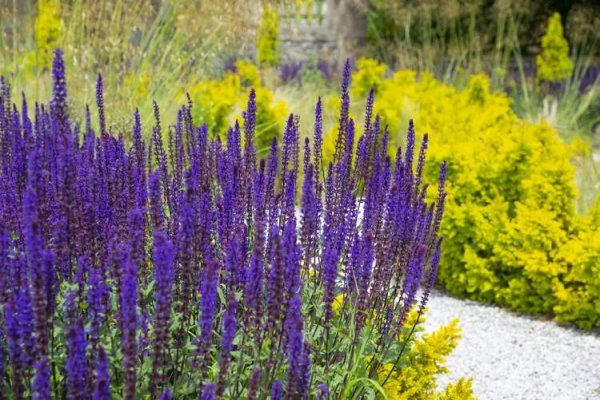
Meadow sage (Salvia x sylvestris), known as May night salvia, is a hardy hybrid for Zones 4-8, producing purple-blue flowers in summer. It grows upright to 1.5 to 2 feet tall and 1 to 1.5 feet wide, preferring excellent drainage with some sand mixed in. While drought-resistant, its flowers are most vivid in cooler weather.
Creeping sage (Salvia sonomensis), native to California, is less common in nurseries but stands out for its mat-forming habit and extreme drought tolerance. It has blue-purple flowers in May and June, rising on 6-inch spikes above evergreen foliage. The plant stays under 12 inches tall but can spread 10 to 15 feet, making it an excellent ground cover for light or partial shade, such as under shrubs. It grows in sandy, loamy, or clay soil that is well-drained and does not tolerate regular summer watering.
For gardeners aiming to attract wildlife, salvias are a top choice. The tubular flowers are among the best nectar sources for hummingbirds, and they also draw honeybees, bumblebees, native bees, and butterflies. The seeds provide food for house finches, American goldfinches, and other birds, adding another layer of ecological value to the landscape.