For gardeners in cold regions, winter doesn't have to mean a colorless landscape. A diverse group of shrubs—from berry-bearing hollies to golden evergreens and vividly colored twigs—can keep yards vibrant even in the depths of December, January, and February. While flowering shrubs are limited to warmer climates, northern gardeners can rely on shrubs with berries, interesting bark, or evergreen foliage to provide visual interest throughout the season.
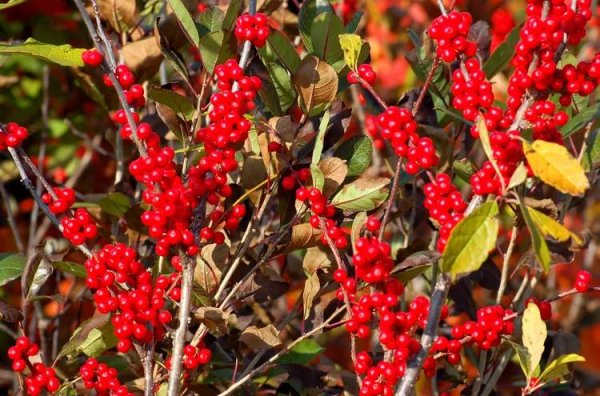
Among the most striking berry producers is the winterberry (Ilex verticillata), a deciduous holly that, unlike its evergreen cousins, drops its leaves but compensates with a heavy display of red berries. Its berries are most vibrant in early winter before extreme cold causes them to shrivel. Similarly, firethorn (Pyracantha coccinea) bears orange berries that attract birds, and in the southern part of its range, it retains its green leaves through winter. For a less common look, inkberry holly (Ilex glabra) offers black berries, while the Blue Princess holly (Ilex x meserveae 'Blue Princess') produces the classic red berries and prickly blue-green foliage associated with Christmas decorations.
Shrubs with striking bark add another layer of winter interest. The red twig dogwood (Cornus alba) stands out with its bright red stems, while the yellow twig dogwood (Cornus stolonifera 'Flaviramea') offers a golden alternative. Both thrive in moist, well-drained soil and are hardy to zone 3. For peeling bark, the oakleaf hydrangea (Hydrangea quercifolia) and ninebark (Physocarpus opulifolius) provide texture, with ninebark also available in purple and golden foliage varieties.
Evergreens That Hold Their Color
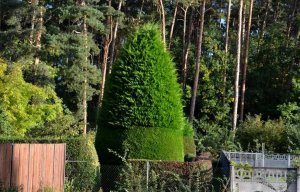
Evergreen shrubs form the backbone of a winter garden. The dwarf Alberta spruce (Picea glauca 'Conica') is a needled evergreen often planted in pairs at entryways, and it can even be decorated as an outdoor Christmas tree. For a golden touch, the threadleaf false cypress (Chamaecyparis pisifera 'Gold Mop') maintains its needle-like golden foliage through winter. The dwarf Mugo pine (Pinus mugo) serves as a low ground cover, though its impact diminishes in areas with heavy snowfall.
Broadleaf evergreens also contribute. English boxwood (Buxus spp.) is prized for its delicate leaves and is often sheared into hedges; its foliage may take on a bronze tinge in winter. The Moonshadow euonymus (E. fortunei 'Moonshadow') features green-edged leaves with golden centers, while the Emerald and Gold euonymus (E. fortunei 'Emerald 'n' Gold') reverses the pattern with golden edges and green centers. Both are low-growing and spread nicely.
Arborvitaes offer a range of shapes and sizes. The Little Giant arborvitae (Thuja occidentalis 'Little Giant') forms a compact globe of green, gold, or bronze, while the Emerald Green arborvitae (Thuja occidentalis 'Emerald Green') grows tall and is commonly used for privacy screens.
Choosing the Right Shrub for Your Zone
When selecting shrubs, it's crucial to match the plant's hardiness zone with your local climate. For example, the Sky Pencil holly (Ilex crenata 'Sky Pencil') thrives in zones 5b-9 and is a columnar shrub often used to frame entryways. The rockspray cotoneaster (Cotoneaster horizontalis), a drought-tolerant ground cover with red berries, is suited to zones 5-7. Black chokeberry (Aronia melanocarpa) produces dark purple berries that persist into winter and serve as an emergency food source for birds; it is hardy in zones 3-8.
Camellia (Camellia japonica) is an option for gardeners in zones 7-9, where winters are milder; it can bear flowers in winter under the right conditions. For those in colder areas, the dwarf Mugo pine and ninebark are hardy to zone 2, making them reliable choices for harsh climates.
In addition to the shrubs listed, gardeners may also consider witch hazel, which can flower in winter, and perennials like winter aconite (Eranthis hyemalis) and Christmas rose (Helleborus niger) that bloom in the cold. These additions can extend the season of interest even further.
With careful selection, a winter garden can be a source of color and life, offering a rewarding view even when snow covers the ground.