Homeowners who have had a tree removed often face a stubborn remnant: the stump. Professional removal can be costly, and DIY extraction is tough due to the root system. Rather than viewing it as an eyesore, a growing number of gardeners and designers are turning stumps into functional and decorative features.
From simple seating to whimsical fairy gardens, the possibilities are broad. The following 14 ideas, gathered from design and gardening sources, show how a stump can be integrated into both indoor and outdoor settings.
Practical Repurposing for Outdoor Living
One of the most straightforward uses is converting a stump into seating. Around a small fire pit, for example, stumps can provide extra places to sit without taking up much room. They blend naturally with the landscape, as seen in a design shared by @ann.living on Instagram.
Another functional option is to hollow out a stump using a power drill and a wood boring bit. The resulting cavity can serve as a natural planter for flowers, offering an organic way to add container plants to a garden. For larger trunks, splitting and hollowing one half can create a water trough or a unique water feature, which can be positioned above a pond or directed to manage runoff away from the home.
For those with multiple stumps, varying heights can be used to display colorful pots and plants, creating a tiered effect that adds visual interest.
Indoor and Decorative Applications
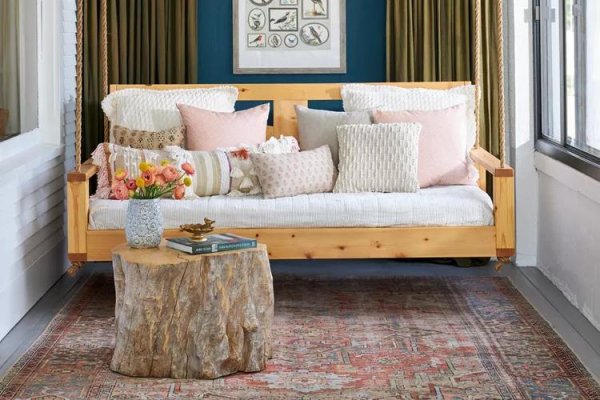
Inside the home, a sanded-down stump can double as an end table or a plant stand. In a living room featuring natural elements like a rattan chandelier and a jute rug, a stump table complements the rustic aesthetic. Similarly, in a sunroom or screened porch, a large stump can serve as a coffee table, merging indoor comfort with outdoor charm.
For a creative project, stumps can be sliced into wood discs to use as bases for party decor, such as displaying wands at a fairy-themed event. A stump can also be transformed into a garden sculpture—for instance, topping it with a dome of moss and dirt makes it resemble a mushroom. Adding a small door and other details can turn it into a fairy or gnome house.
Wildlife and Garden Integration
Stumps can also support local wildlife. A small, hollow trunk makes a natural base for a birdhouse, encouraging birds to visit the yard. For the more ambitious, a large trunk can be hollowed out to create a natural beehive for honey bees. It's important to note that bees need space to produce honey; a typical hive is about 22 inches by 16 inches, and a 5-foot radius around the hive is recommended.
In the broader garden, a large fallen trunk can be repurposed as a garden bed, becoming a focal point rather than a disposal problem. Even without major DIY skills, a stump can be used as a simple plant stand, elevating a potted houseplant like a Tetrastigma to draw more attention to its foliage.
These ideas demonstrate that with a bit of creativity, a tree stump can be more than just a leftover—it can be a valued part of the home and garden.