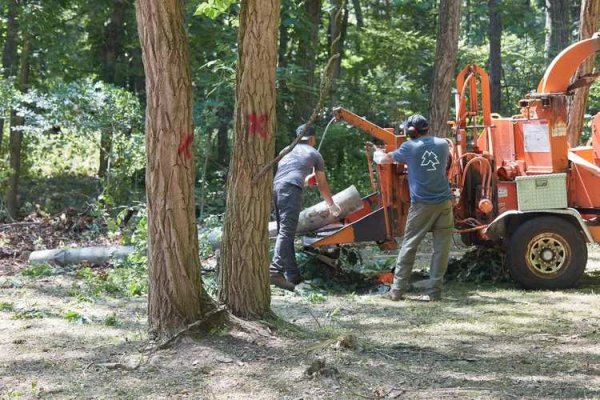
Removing a tree from your property is rarely a simple transaction. The final bill can swing from a few hundred dollars for a modest sapling to several thousand for a towering oak in a tight spot. On average, homeowners pay about $875 per tree, but that figure masks a wide range—from roughly $295 on the low end to $1,455 on the high end, according to industry data.
The price hinges on several factors, with tree height being the most significant. A 20-foot tree might cost as little as $135, while a 50-foot giant can run upwards of $1,700. But size isn't the only variable. Species, location, accessibility, and whether you need permits or extra equipment all play a role.
Height Drives the Base Price
Tree removal services typically price by the foot, and the math is straightforward: taller trees demand more labor, more specialized gear, and often more risk. For small trees under 20 feet, the average cost is $270, with a typical range of $135 to $405. Medium trees—those between 20 and 30 feet—average $335, though prices can stretch from $215 to $450.
Large trees, which reach 30 to 50 feet, average $690, with a range of $475 to $900. The biggest jobs involve trees over 50 feet, where the average climbs to $1,335, and costs can reach as high as $1,705. These larger projects may require cranes, power shut-offs, or traffic control, all of which add to the bill.
Species also matters, though often indirectly. A maple, for instance, averages $1,500 to remove, while a pine runs about $1,250. Oaks come in around $1,200, and cypress trees average $1,000. Palm trees are on the cheaper end at $555, largely because they tend to be shorter and less massive.
Beyond the Cut: Permits, Stumps, and Emergencies
Before you schedule a removal, check with your local municipality. Permits are commonly required, especially for trees with trunks larger than four to six inches in diameter. Permit fees typically range from $50 to $800, with most homeowners paying around $200. Some cities fast-track permits for dead or hazardous trees, and a few allow retroactive applications after the tree is down.
If the tree is dead or poses a hazard, removal costs average $670, but can range from $140 to $1,200. Emergency removals—when a tree has already fallen on a home or car—are far pricier, averaging $2,990, with some jobs reaching $4,500. These services arrive within hours and often involve complex rigging and cleanup.
Stump removal is another line item. Grinding a stump down to below ground level averages $290, with smaller stumps costing as little as $150 and larger ones up to $425. If you'd rather have the stump fully removed, the price is similar. Wood chipping, if you want the debris hauled away, runs about $145 per hour, though it can range from $75 to $215.
Crane rental can add $875 to $1,040 to a job, and traffic management—required when work encroaches on public roads—costs about $200 per hour. An arborist's report, sometimes needed for permit applications, will set you back $450 to $950.
DIY vs. Professional: Know Your Limits
For very small trees—those with trunks under two inches in diameter and heights of eight to twelve feet—a confident homeowner might safely handle the job with proper precautions. But even medium trees can fall in unpredictable directions, risking damage to power lines, fences, or buildings. Most experts recommend hiring a professional for anything larger.
To keep costs down, consider maintaining trees to avoid removal altogether, trimming rather than felling, and checking whether your homeowner's insurance covers storm damage. Some municipalities or utility companies will remove trees on their property lines at no cost to you. And if the wood is good quality, you can sell it or season it for firewood.
Before any work begins, consult a certified arborist—look for credentials from the International Society of Arboriculture (ISA)—and verify local regulations. A little upfront research can prevent a hefty surprise on your final bill.